
Anhui Jwell Precision Mold Co., Ltd.
Anhui Jwell Precision Mold Co., Ltd.
One
Polymer film die head: The "ultimate shaper" of extrusion molding process
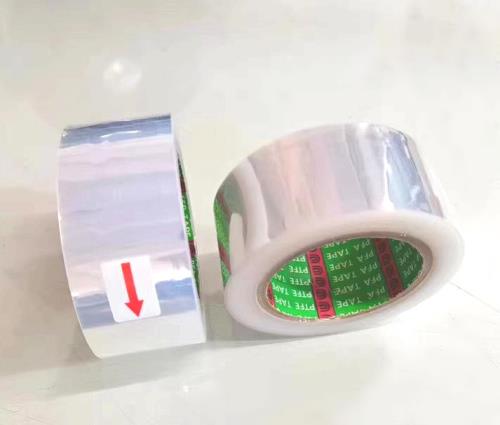
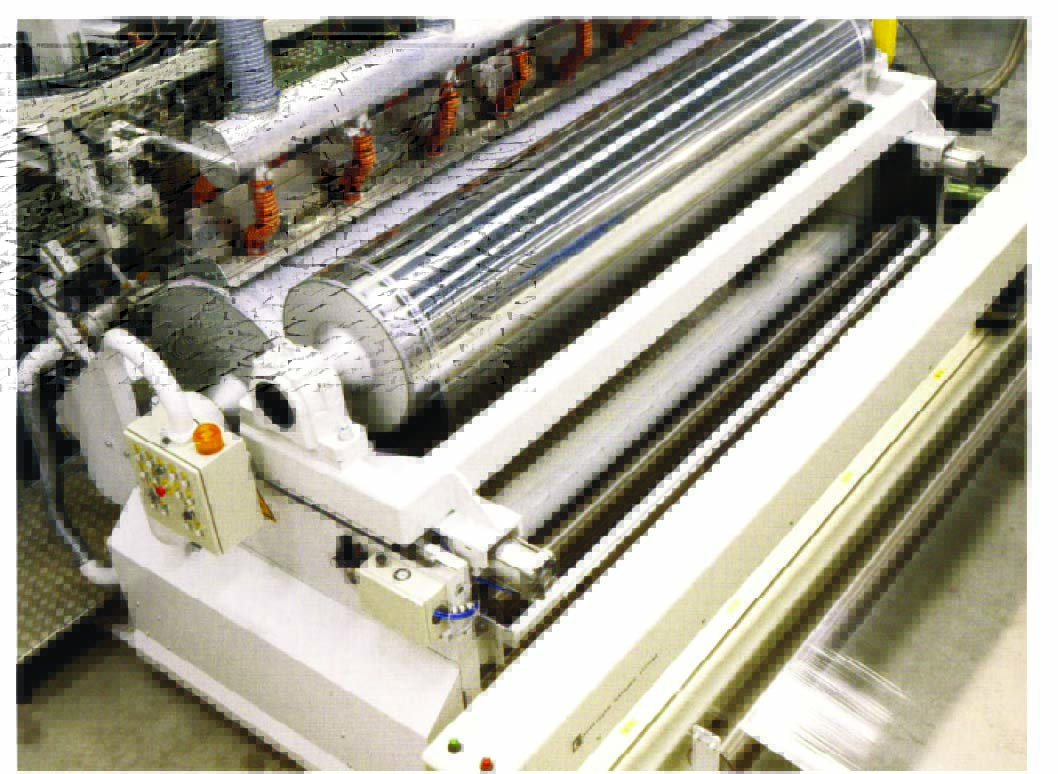
In the contemporary polymer materials processing industry, film extrusion production lines serve as the critical equipment system for transforming raw polymers into high-performance film products. At the heart of this system lies the single-layer and multi-layer polymer film die head, produced by Anhui Jwell Precision Mold. Functioning as the "ultimate shaping device" in the entire extrusion molding process, this component is tasked with converting high-temperature molten polymer fluid into continuous film products with highly uniform thickness across the web width and stable physical properties. This is achieved through its highly precise internal flow channel system and forming mechanism.
From the perspectives of fluid dynamics and material forming science, the role of a film die extends far beyond simple "shaping." In essence, it serves as an integrated field where melt flow behavior, heat transfer processes, material phase transitions, and microstructural orientation control converge. For single-layer film production, the die must ensure completely consistent flow rates and pressure distribution of the melt across the width direction, thereby preventing thickness variations, flow marks, or mechanical anisotropy. For multi-layer co-extrusion film production, the function of the die becomes even more complex and critical: it must precisely guide, spread, and combine several polymer melts with different rheological properties, thermodynamic attributes, and functional roles inside the die. This is achieved through an independent yet coordinated multi-channel stacked distribution system. The process demands precise control at the micro- or even nanoscale over the interfacial clarity, thickness distribution accuracy, and interlayer bonding strength of each functional layer (such as barrier layers, adhesive layers, support layers, and surface functional layers). Therefore, a multi-layer co-extrusion die is not merely a shaping unit but a core component that enables material composite design and imparts high-value-added functionalities to the film—such as high barrier properties, enhanced strength, selective permeability, and specialized surface characteristics. Its technological level directly defines the quality benchmarks, functional limits, and application boundaries of the final film product, making it an indispensable key equipment for producing high-end packaging films, optical films, new energy films, and specialized industrial films.
Two
Technical criticality: Three-dimensional integration of quality, efficiency, and innovation
The film die head developed and manufactured by Anhui Jwell Precision Mold demonstrates its technological criticality across three dimensions: decisive control over product quality, systematic optimization of production efficiency, and fundamental support for material innovation. These dimensions collectively establish it as a pivotal hub connecting fundamental science with industrial manufacturing.
1 Decisive factors of film quality
The internally optimized flow channel system, based on Computational Fluid Dynamics (CFD), serves as the foundation for ensuring melt uniformity. Starting from the feed end, advanced flow channel configurations such as "coat-hanger," "fish-tail," or "multi-manifold" designs, combined with precise channel cross-sectional dimensions and gradual transition curves, enable accurate compensation for the viscoelasticity, shear-thinning behavior, and temperature sensitivity of polymer melts. This ensures that the melt achieves highly uniform pressure, flow velocity, and temperature across the entire web width before reaching the final forming slit (die lip).
he die lip adjustment mechanism with micron-level precision—typically employing thermal bolts or flexible lip systems—serves as the final execution unit for thickness control. By performing localized fine-tuning of the die lip gap, either online or offline, it can real-time correct minor thickness deviations caused by equipment installation, thermal deformation, or material fluctuations. This enables the transverse direction (TD) thickness uniformity of the film to be maintained at an exceptionally high standard, typically within ±1.5%. Such precise adjustment capability is fundamental to preventing optical interference fringes, reducing defects in subsequent processing steps such as coating or printing, and ensuring smooth and uniform film winding.
For multi-layer co-extrusion dies, the technological core lies in laminar flow distribution and composite technology. Through independent multi-layer flow channel design and precision flow distribution blocks, each layer of melt is ensured to enter the composite cavity at the predetermined proportion and distribution state. The flow channel design at the composite interface is particularly critical, as it must prevent interlayer interference and interface instability phenomena (such as wave patterns or encapsulation), thereby achieving nanoscale precision in the overlay and strong bonding of each functional layer along the thickness direction. This forms the foundation for producing multi-layer films with clear interfacial structures (such as ABA or ABCBA configurations) and realizing their preset composite functions, including oxygen barrier, moisture resistance, puncture resistance, and heat sealing properties.
2 Systematic controller for production efficiency
Optimized die design directly contributes to production economics. On one hand, excellent flow uniformity reduces edge trim and scrap rates caused by thickness deviations right from the source. On the other hand, the intelligent thick-edge reduction system integrated into Anhui Jewell's dies automatically eliminates the thickened areas at both edges of the film, which are inevitably caused by the "end effect" at the flow channel terminals. This not only increases the effective film width and material utilization rate but also significantly improves winding quality by preventing issues like "ridge formation" or curling of the roll due to hard edges.
Furthermore, the structural rigidity, thermal expansion compensation design, as well as wear and corrosion resistance of the die determine its long-term stability under high-speed, continuous, and high-temperature operating conditions. A high-performance die can withstand prolonged exposure to various polymers, maintaining the smoothness and dimensional stability of its flow channels. This enables the production line to operate stably at higher speeds, reduces unplanned downtime, and enhances Overall Equipment Effectiveness (OEE).
3 Any novel polymer materials—such as bio-based plastics, biodegradable materials, or high-flow engineering plastics—or innovative film structure designs, such as micro-layer co-extrusion or gradient functional films, must ultimately rely on a precise, reliable, and adaptable die system to transition from laboratory formulations and small-scale trials to large-scale industrial production. The die must be capable of accommodating the unique rheological behavior, thermal stability, and processing windows of these new materials.
During the design phase, Anhui Jwell's dies fully account for broad material adaptability. Through replaceable flow channel inserts, modular layering units, and flexible temperature control systems, the same die platform can compatibly process a variety of polymers with significantly different properties. This adaptability significantly shortens the process development cycle for new materials, lowers the barriers to industrialization, and establishes the die as a critical bridge and physical vehicle for transforming cutting-edge material science research into market-ready products.
Three
Economic efficiency: modular, flexible, and intelligent production support
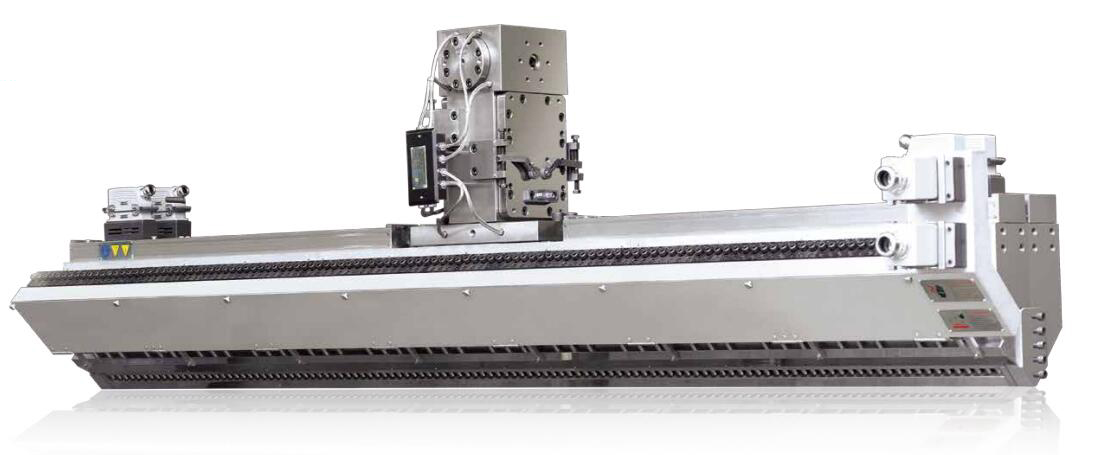
In response to increasingly fierce market competition and the urgent customer demand for multi-variety, small-batch, and rapid changeover production, Anhui Jwell Precision Mold has achieved significant breakthroughs in the economical and efficient design of its dies. The core of this advancement lies in the deep integration of modular architecture and intelligent functionality.
The two efficient width adjustment schemes provided by the company represent the advanced practices in the current industry:
Internal Block-Type Continuous Width Adjustment System:
This system alters the actual flow channel width for polymer melts through movable adjustment blocks or valves inside the die. Its key advantage lies in achieving true continuous and stepless width adjustment, allowing switches between different production specifications without replacing any external hardware, thereby ensuring simple and rapid operation. More importantly, it precisely matches melt flow with the forming width at the source, minimizing the generation of "ineffective" edge melt to the greatest extent. This significantly reduces edge trim waste, making it particularly suitable for high-value raw materials or production scenarios requiring frequent width changes.
External Block-Type Rapid Width Adjustment System:
This solution employs physical blocking at the external die lip. Although the width adjustment is achieved in segmented steps, its advantages include exceptionally intuitive and fast operation, high reliability, and minimal disruption to the internal flow field of the die, ensuring excellent thickness uniformity. For customers with relatively fixed product specifications but needing to switch between different standard web widths, this solution offers a cost-effective choice.
Both solutions seamlessly integrate an intelligent thick-edge reduction system. This system actively intervenes in the cooling and shrinkage process at the film edges through precise edge heating and/or specially designed end flow channels, effectively eliminating the thick-edge areas that are inevitable in traditional processes. This not only directly improves film formation efficiency and material utilization but also fundamentally addresses winding quality issues caused by thick edges—such as uneven roll ends or internal layer deformation due to pressure. As a result, it ensures the smooth progression of subsequent processing steps, including slitting, printing, and laminating.
This modular and intelligent design philosophy enables customers to build highly flexible production lines with lower initial investment and operational costs. Whether transitioning from narrow specialty films to ultra-wide agricultural or geotechnical films, the production line can quickly switch specifications, enabling agile, order-driven manufacturing. This significantly enhances a company's competitiveness and profitability in a fluctuating market.
Four
Broad adaptability of materials and processes: with cast film forming as the core application area
The outstanding performance of Anhui Jwell's polymer film die heads has been fully validated and leveraged in the cast film forming process. With advantages such as rapid cooling rates, excellent optical properties of the film, and precise thickness control, the cast film process has become the preferred method for producing ultra-thin to thin high-performance films.
To meet the stringent requirements of the casting process, Jwell die has undergone in-depth optimization in the following aspects:
Exceptional Surface Engineering:
All flow channels and die lip surfaces in contact with the melt undergo mirror-level ultra-precision polishing, ensuring high surface smoothness. Building on this, specialized surface treatment technologies, such as Physical Vapor Deposition (PVD) chromium-based coatings and Diamond-Like Carbon (DLC) coatings, are widely applied. These treatments not only provide the flow channels with extremely high hardness and excellent resistance to abrasive wear but also effectively prevent the adhesion of polymer decomposition residues. This results in superior "melt self-cleaning" functionality, maintaining long-term channel smoothness and cleanliness, significantly extending maintenance intervals, and ensuring product purity.
Extensive Material Adaptability:
Through precise rheological design and rigorous process validation, this series of dies can stably and efficiently process a broad spectrum of materials, ranging from commodity plastics to engineering plastics. These include, but are not limited to:
Polyolefins: CPP (cast polypropylene), CPE (cast polyethylene), LLDPE, mPE, etc.
Ethylene Copolymers: EVA (ethylene-vinyl acetate), EEA (ethylene-ethyl acrylate), etc.
Specialty Engineering Plastics: PET (polyethylene terephthalate), PA (polyamide, such as nylon 6 or nylon 66), PVB (polyvinyl butyral, used in automotive and architectural laminated glass), etc.
Other Polymers: Soft and rigid PVC (polyvinyl chloride), TPU (thermoplastic polyurethane), etc.
Stable Co-extrusion Process Support:
Whether for simple two-layer composites or complex five-layer, seven-layer, or even more multi-layer co-extrusion structures, the die's multi-layer flow channel distribution system ensures that each layer of melt maintains independent and stable flow before merging, achieving smooth and undisturbed lamination at the interface. Its precise temperature zoning control capability—typically featuring independent heating and cooling circuits for each critical functional area—provides optimal processing temperature zones for polymers with different melting temperatures. This ensures the microstructural integrity of each functional layer and strong interlayer bonding, offering reliable support for producing high-barrier packaging films, weather-resistant construction films, high-performance battery separators, and similar products.
Five
Conclusion: The Precision Core Empowering the Future of the Film Industry
As the "heart and brain" of modern polymer film extrusion lines, single-layer and multi-layer cast film dies play a pivotal role. They transform intangible molten polymers into two-dimensional material products with precise geometric dimensions, stable mechanical properties, and specific functional attributes through the perfect integration of science and engineering.

Wechat account

