
Anhui Jwell Precision Mold Co., Ltd.
Anhui Jwell Precision Mold Co., Ltd.
One
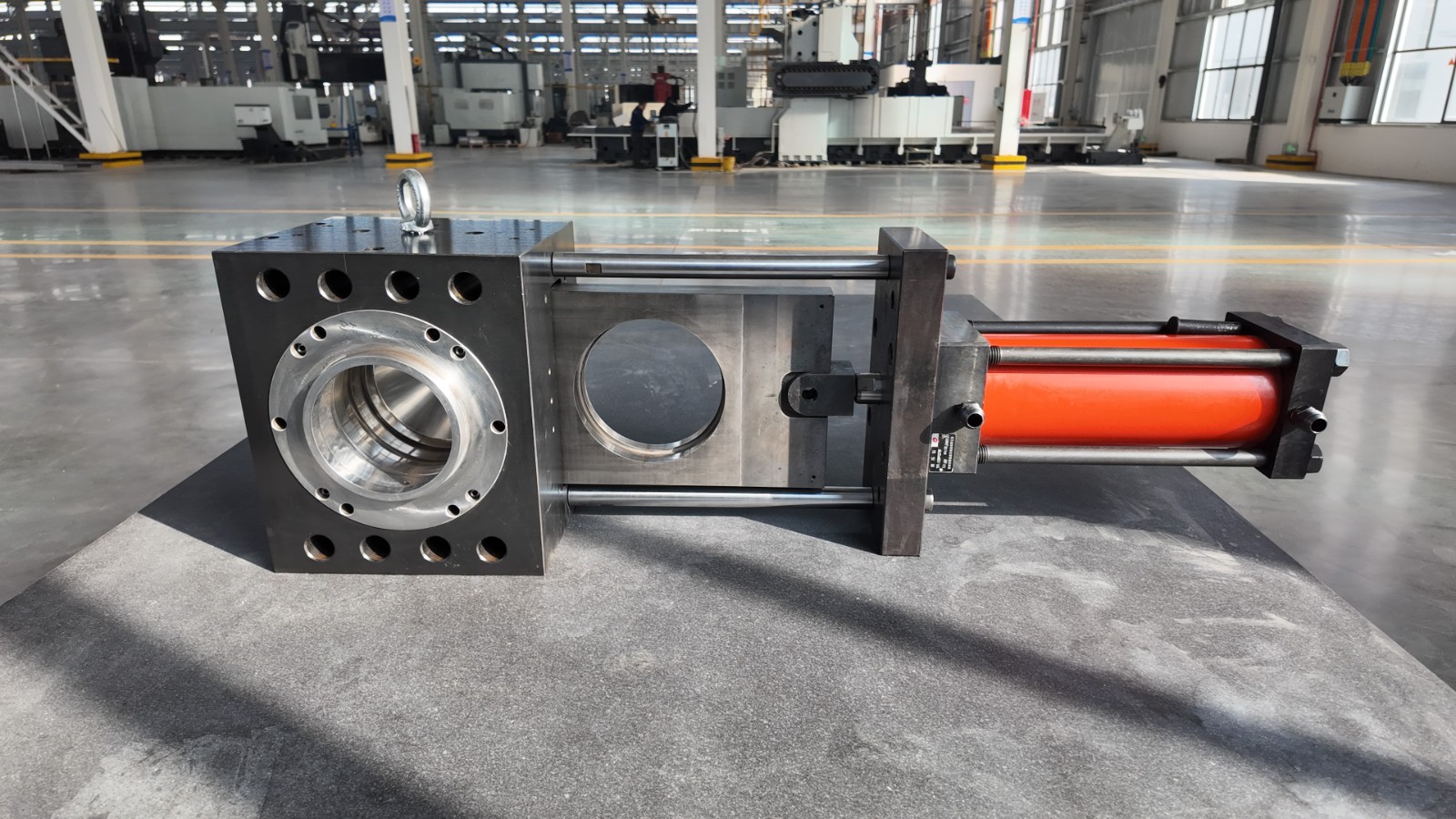
The continuous hydraulic flow screen changer is a core auxiliary equipment in polymer material extrusion lines. Its function is to achieve efficient and continuous filtration of molten material, ensuring product quality and operational efficiency without interrupting production. Its primary mission is filtration and purification—during the extrusion process, raw materials inevitably contain unmelted particles, gels, metal debris, or impurities. The high-precision screen inside the screen changer acts as a strict checkpoint, effectively intercepting these foreign matters to ensure that the melt entering the die is sufficiently pure. For high-precision products such as optical films, medical tubing, and high-grade cable materials, this filtration process directly determines the final product quality. More critically, the hydraulic flow screen changer from Anhui Jwell transforms this process from "intermittent" to "continuous": traditional manual screen changers require shutdowns for screen replacement when clogged, causing production interruptions and significant waste; hydraulic drive, however, completes the switch between old and new screens within seconds without any downtime, greatly enhancing equipment effectiveness and becoming the standard for achieving automation and reducing manual intervention in continuous production lines such as pelletizing, film blowing, and pipe extrusion.
Two
In addition to ensuring continuous production, Anhui Jwell's continuous hydraulic flow screen changer plays an irreplaceable role in stabilizing the process, reducing energy consumption, and protecting equipment. During extrusion, pressure stability is a prerequisite for dimensional accuracy and consistent performance of the product, while gradual screen clogging inevitably leads to an increase in back pressure. Through optimized flow channel design and a pressure-stabilizing structure, the hydraulic screen changer minimizes pressure fluctuations during screen changes. High-end models, such as dual-station or backflush types, can even maintain essentially constant pressure during the screen change process, ensuring that the extrusion back pressure remains within the ideal range, thereby stabilizing product quality. At the same time, timely replacement of clogged screens prevents the extruder from consuming additional torque due to excessively high back pressure, achieving energy-efficient operation. The feature of non-stop screen changing completely eliminates the substantial waste generated during traditional startup and shutdown processes, significantly improving material utilization. On a deeper level, by intercepting hard impurities from the raw materials in advance, the hydraulic screen changer effectively protects subsequent precision components such as dies, pelletizers, and screws, reducing wear and maintenance costs while extending the overall service life of the equipment. It can be said that it is both the unsung "gatekeeper" on the production line and a critical link supporting high-efficiency, high-quality extrusion.
Three
The hydraulic flow screen changer systematically solves the problems of excessive impurities and high rejection rates in extrusion production from the root through three core mechanisms: continuous filtration, pressure stabilization, and non-stop screen changes.
1 Addressing the issue of excessive impurities, the root causes lie in dust and metal particles contained in the raw materials, debris mixed into recycled materials, as well as gel particles or carbides generated during the production process. The hydraulic screen changer's solution is to construct a robust physical barrier: by configuring high-precision filtration screens, it effectively intercepts impurities larger than the screen mesh aperture before the melt enters the die. Based on the cleanliness of the raw materials, multi-layer composite screens (such as a combination of coarse bottom filtration and fine surface filtration) are employed to achieve gradient filtration, ensuring both melt throughput and filtration accuracy. Simultaneously, the hydraulic locking mechanism ensures a seal around the screen, preventing unfiltered melt from "short-circuiting" and bypassing the screen. These measures enable an impurity interception rate of over 99%, guaranteeing melt cleanliness at the source.
2
The core causes of high rejection rates are more complex, often closely related to factors such as the continuous rise in back pressure caused by screen clogging, fluctuations in extrusion output, sudden pressure changes during screen changes leading to dimensional deviations or melt degradation, and undetected screen rupture resulting in a sudden surge of impurities into the die. Anhui Jwell's hydraulic flow screen changer addresses these issues through multiple stabilizing mechanisms: First, it employs a large filtration area design and optimized flow channel structure to reduce the pressure drop when the melt passes through the screen. Equipped with pressure sensors, it monitors the pressure differential before and after the screen in real-time, prompting a screen change when the differential reaches a set value, thereby avoiding severe pressure fluctuations caused by complete screen blockage. Second, the screen change action is completed rapidly by the hydraulic system (taking only 2 to 5 seconds). High-end models utilize dual-station alternating or slide-plate designs to ensure the melt channel remains unobstructed during the transition between old and new screens, minimizing pressure fluctuations. Additionally, a multi-hole support plate or screen mesh structure is placed behind the screen to withstand the high melt pressure, preventing screen deformation or rupture. Regular screen change prompts also prevent fatigue damage from prolonged use. Most critically, the hydraulic screen changer achieves non-stop screen changing, completely eliminating the substantial amount of non-conforming products inevitably generated during the startup and shutdown processes of traditional manual screen changes, thereby enabling continuous production.
Through the mechanisms described above, the hydraulic flow screen changer from Anhui Jwell can control pressure fluctuations within a very small range, ensuring that the screen change process hardly affects normal production. Product dimensional tolerances remain stable, and the rejection rate can be reduced by 30% to 80%. In summary, it is not only a tool for filtering impurities but also key equipment for stabilizing the process, saving energy, reducing consumption, and protecting the die and screw. It provides a systematic guarantee for efficient, high-quality operation of the extrusion line.

Wechat account

