
Anhui Jwell Precision Mold Co., Ltd.
Anhui Jwell Precision Mold Co., Ltd.
One
I. Application and Advantages of Aviation Meal Trays
Aviation meal trays are indispensable core utensils in the aviation catering system, bearing the multiple responsibilities of food supply, passenger experience, and airline image. In modern aviation services, meal trays must not only meet basic load-bearing functions but are also expected to meet high standards of lightweight design, durability, safety, and aesthetic appeal.
Traditional aviation meal trays are mostly made of stainless steel or melamine. Although these materials offer sufficient strength, they are relatively heavy, increasing the aircraft's load and fuel consumption. As the aviation industry places greater emphasis on energy conservation and emission reduction, lightweight design has become the primary direction for upgrading meal trays. PET (polyethylene terephthalate) stands out due to its excellent performance: its density is only about one-seventh that of metal, enabling significant weight reduction; it has good heat resistance, capable of withstanding high temperatures in aircraft ovens; it complies with food contact material safety standards; and its excellent processing properties make it suitable for mass production.
However, while meeting the demand for weight reduction, ensuring that strength, stiffness, and aesthetics are not compromised remains a challenge for single-material PET trays. This is precisely where the 1250 PET co-extrusion die head for dual-color sheets plays a key role.
Two
Characteristics and Applications of the 1250 PET Co-extrusion Die Head for Dual-Color Sheets
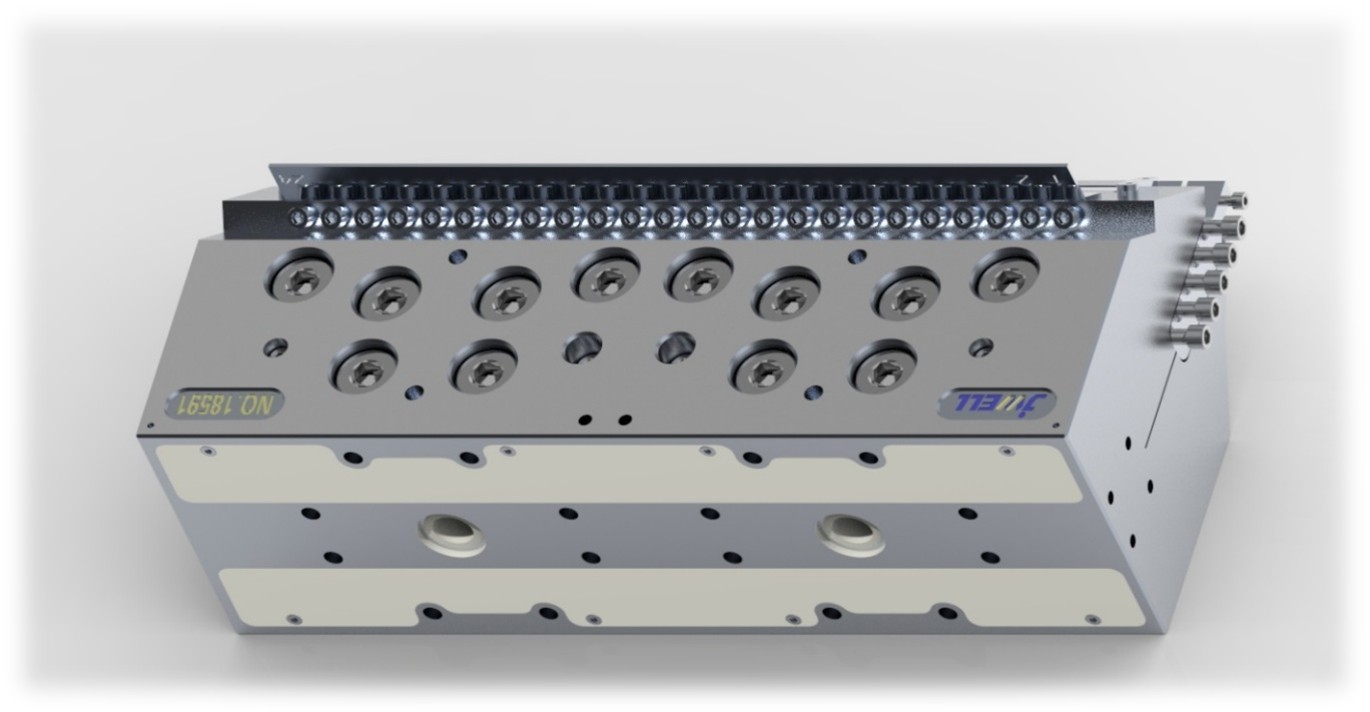
The 1250 PET co-extrusion die head for dual-color sheets (Model: JW-P-A2), manufactured by Anhui Jwell Precision Machinery Co., Ltd., is precision equipment specifically designed for high-end PET sheet extrusion. Its core features are as follows:
Wide-width, high-efficiency production: With an effective width of 1250mm, it is suitable for large-scale aviation meal tray production lines, achieving a single-machine output of up to 800kg/h to meet mass supply demands.
Broad thickness range: Capable of producing PET sheets with thicknesses ranging from 0.2mm to 1.5mm, covering various specifications from thin-walled lightweight trays to structurally reinforced components.
Dual-color co-extrusion technology: Supports the composite molding of two colors or two formulations of PET material within the die head, enabling the one-step extrusion of functional and decorative layers.
Precision temperature control system: Utilizes electric heating combined with an optimized flow channel design to ensure uniform melt temperature across the 1250mm width, with minimal transverse temperature deviation.
High-rigidity structural design: Made of high-quality alloy steel, ensuring the rollers do not deform under high linear pressure, thereby maintaining stable thickness tolerance of the sheets.
This die head from Anhui Jwell is widely used in the production of aviation meal trays, thermoformed food packaging containers, cosmetic sheet materials, and pharmaceutical packaging. It is particularly well-suited for manufacturing aviation meal trays that demand both lightweight design and high quality.
Three
How It Helps Aviation Meal Trays Achieve "Weight Reduction Without Quality Loss"
Weight Reduction: Fundamental Assurance for Thin-Walled Design
Weight reduction in aviation meal trays is primarily achieved by reducing wall thickness. However, this requires the sheet to possess extremely high thickness uniformity. The 1250 PET co-extrusion die head utilizes a coat-hanger manifold design and micron-level lip adjustment to ensure consistent melt pressure and uniform flow velocity across the entire width. The transverse thickness tolerance of the sheet is controlled within a very strict range. This allows the tray to minimize wall thickness while maintaining strength, achieving the weight reduction goal without creating local weak points.
No Quality Loss: Structural Optimization of Strength and Stiffness
Simply thinning the wall can lead to decreased stiffness. The 1250 dual-color co-extrusion die head enables a "skin-core" structural design through its co-extrusion technology: the core layer uses reinforced PET (such as glass fiber-reinforced or high-viscosity formulations) to provide mechanical support; the surface layer uses virgin material or functional color masterbatch to ensure appearance and food safety. This melt bonding of functional and structural layers results in interlayer bonding strength far exceeding that of post-process lamination, ensuring the tray retains sufficient flexural strength and impact resistance even after weight reduction.
Heat Resistance and Dimensional Stability
Aviation meal trays must repeatedly withstand high-temperature disinfection and low-temperature storage, making dimensional stability crucial. The precise temperature control design of the 1250 die head ensures the melt experiences no localized overheating or underheating during extrusion, eliminating the generation of internal stress. This results in sheets with consistent shrinkage rates during subsequent thermoforming and use, preventing the trays from warping or deforming and ensuring long-term precision in service.
Food Safety and Appearance Quality
Aviation meal trays come into direct contact with food, imposing extremely high hygiene and safety requirements. The flow channels of the 1250 die head undergo special polishing treatment, ensuring smooth melt flow with no risk of material stagnation or decomposition, thus avoiding the generation of carbonized particles or gels. Furthermore, the dual-color technology allows brand logo colors or partitioned colors to be formed integrally with the base material in a single step, eliminating the need for post-printing or lamination. This not only avoids the risk of ink migration but also enhances the tray's visual effect and scratch resistance.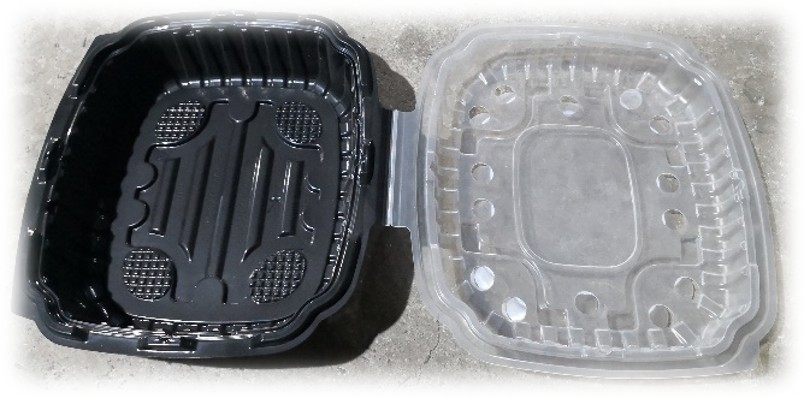
Production Efficiency and Cost Control
A weight reduction design would be difficult to promote if it leads to decreased production efficiency. The 1250 die head's high output of up to 800 kg/h, its quick color-change and self-cleaning capability, and its stable long-term operation characteristics ensure that aviation meal tray manufacturers can maintain cost competitiveness while upgrading their products. The reduction in scrap rate further minimizes raw material waste, making the commercialization of lightweight meal trays more feasible.
In summary
With its wide-width precision extrusion, dual-color co-extrusion technology, uniform temperature control, and high-rigidity structure, the 1250 PET co-extrusion die head from Anhui Jwell for dual-color sheets has successfully overcome the technical challenge of achieving "weight reduction without quality loss" for aviation meal trays. It not only assists airlines in improving fuel efficiency and reducing carbon emissions but also guarantees the passenger dining experience and food safety, providing solid equipment support for the sustainable development of the aviation catering industry.

Wechat account

