
Anhui Jwell Precision Mold Co., Ltd.
Anhui Jwell Precision Mold Co., Ltd.
| The function of Anhui Jwell Precision Mould die | Defining the Cross-Sectional Shape of the Product | Ensuring Dimensional Accuracy and Surface Smoothness | Supporting Subsequent Process Stability | Adapting to Different Materials and Formulations |
the design of Anhui Jwell Precision Mould die | Computer-Aided Manifold and Coat-Hanger Flow Channel | Circular Manifold Channel and Curved Intersection Line Design | Push-Pull Fine Adjustment Structure of the Upper Die Lip | Optimized External Structure |
One
PVC thermoplastic edge banding is made from polyvinyl chloride (PVC) resin through a continuous extrusion process. It is a core decorative and protective profile for panel furniture. By sealing the exposed cross-section of boards, it provides multiple functions including moisture protection, reduced formaldehyde emission, enhanced impact resistance, and improved aesthetics. Thanks to the thermoplastic nature of PVC, the edge banding softens when heated and solidifies upon cooling, making it perfectly compatible with high-speed application processes such as hot-melt adhesive bonding and laser edge banding. This product is widely used in furniture such as cabinets, wardrobes, bookcases, desks, and TV stands, as well as in commercial display counters, indoor skirting boards, door frame trims, and even automotive interior edge protection. As environmental and quality requirements continue to rise, high-performance products that are lead-free, phthalate-free, UV-resistant, and suitable for laser edge banding are becoming mainstream. The key to their stable mass production lies in core technological breakthroughs such as precision extrusion dies, co-extrusion distributors, and flexible fine-adjustment die lips.
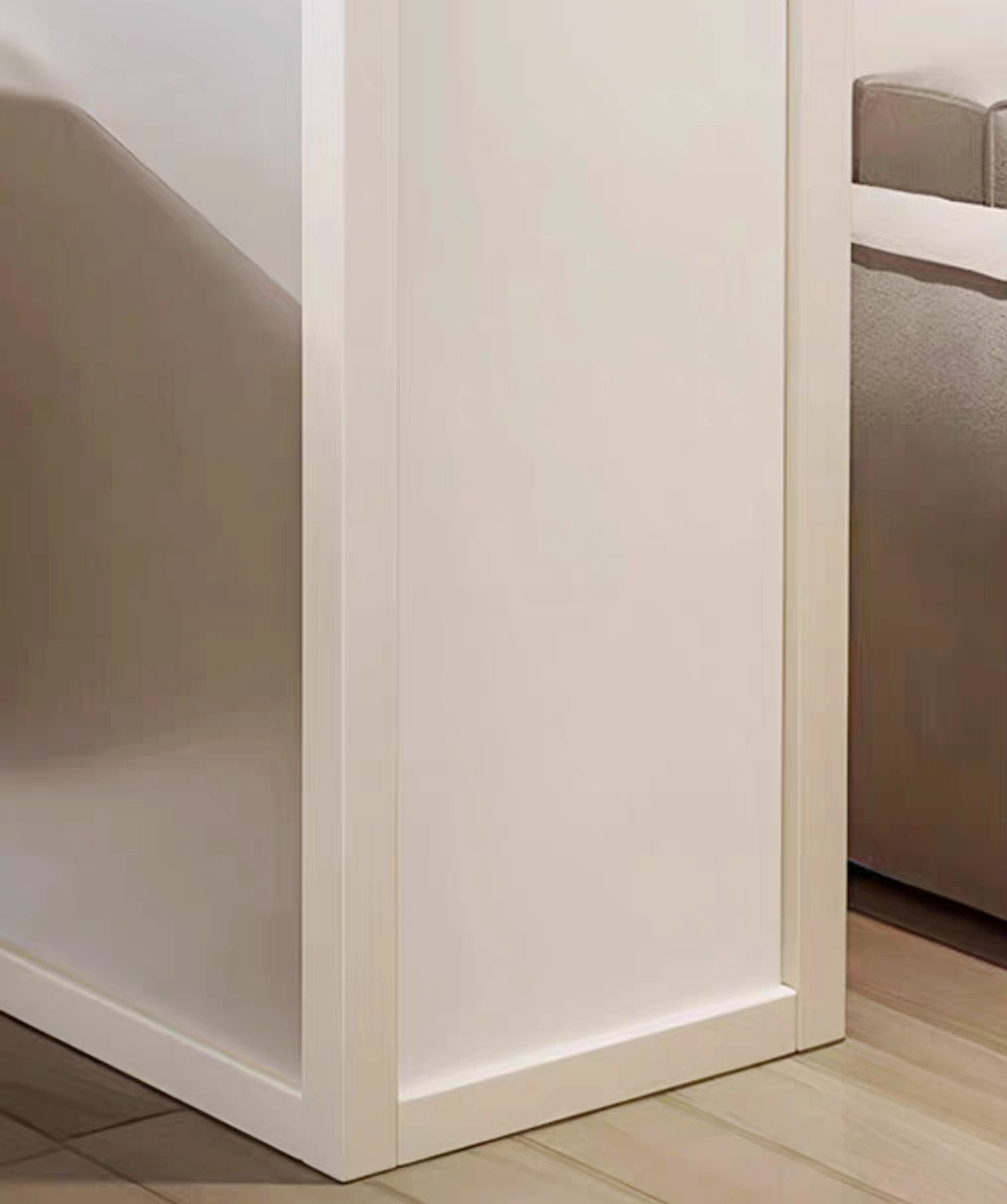
High-quality PVC edge banding offers an excellent balance of flexibility and rigidity, allowing it to adhere seamlessly to straight edges while also conforming to curved contours without cracking. With an optimized formulation, it is resistant to water, moisture, and mild acids and alkalis, making it well-suited for humid environments such as kitchens and bathrooms. Its surface finishing capabilities are outstanding—through printing, roller coating, hot stamping, or co-extrusion lamination, it can achieve a wide range of decorative effects including wood grain, metallic finishes, high gloss, matte, and soft-touch surfaces, meeting diverse aesthetic needs. In terms of production, the material is first precisely compounded, then plasticized in a conical twin-screw extruder. The melt is shaped through a coat-hanger die, followed by vacuum calibration and multi-section water bath cooling to solidify the profile. The final product is available in various thicknesses and widths, and can be supplied either as coils or cut-to-length pieces, offering flexible adaptation to different production line requirements.
Two
PVC edge banding is typically produced using an extrusion molding process. The core workflow includes raw material mixing, extrusion plasticization, die forming, sizing and cooling, as well as haul-off and winding. Among these steps, the PVC edge banding die serves to define the product’s cross-sectional shape, ensure dimensional accuracy and surface smoothness, support subsequent process stability, and accommodate different materials and formulations. Therefore, during the production of PVC edge banding, Anhui Jwell Precision Mould die(https://www.extrusion.cn/en/ ,+86-18755055762)’s mold die is the key component that enables product forming, and its performance directly determines the shape, dimensional accuracy, surface quality, and production efficiency of the edge banding.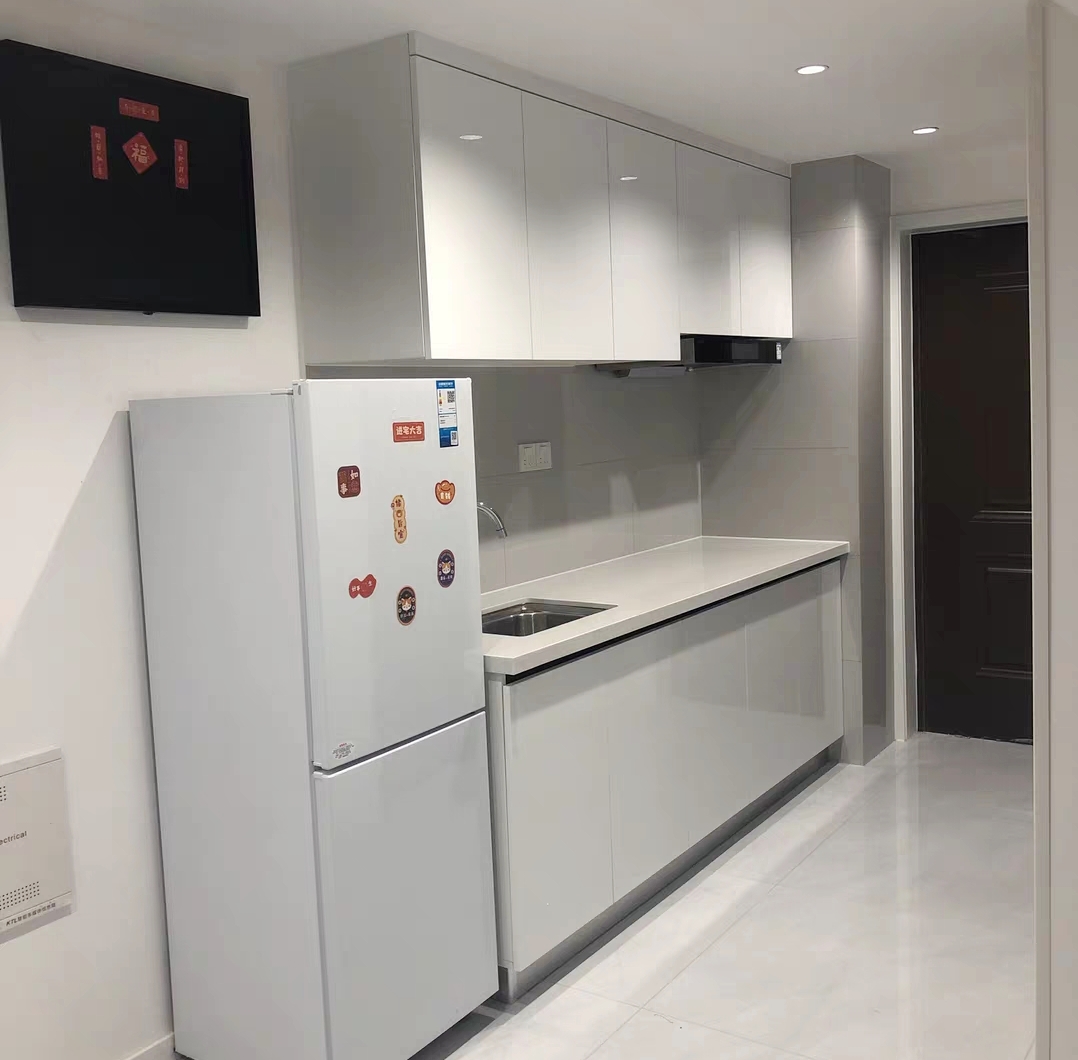
Three
The function of Anhui Jwell Precision Mould die
1 Defining the Cross-Sectional Shape of the Product
The die continuously and uniformly converts the molten PVC material delivered by the extruder into profiles with specific cross-sectional geometries, such as T‑shape, H‑shape, D‑shape, etc. Different cross-sectional designs precisely match the bonding requirements of straight or curved edges of panel furniture, making this the first critical step in achieving functional and diversified forming of edge banding.
2 Ensuring Dimensional Accuracy and Surface Smoothness
A high-precision die can control the edge banding thickness within the range of 0.3–3 mm and the width within 12–80 mm, while ensuring uniform thickness across the width and a smooth, flat surface. Optimized die flow channels and lip design effectively avoid defects such as specks, bubbles, orange peel, or rough textures, providing a clean and uniform substrate for subsequent surface decoration processes like printing and hot stamping.
3 Supporting Subsequent Process Stability
The uniformity of the melt at the die exit directly determines the effectiveness of cooling and calibration as well as the stability of the haul-off process. Any fluctuation in output or uneven thickness can lead to calibration deviations, inconsistent shrinkage, or even warping deformation. A stable and uniform extrudate significantly improves yield and batch-to-batch consistency, ensuring that the edge banding can be applied smoothly on high-speed automatic edge banding lines.
4 Adapting to Different Materials and Formulations
For PVC formulations containing additives such as calcium carbonate, plasticizers, and stabilizers, the die flow channels must be optimized to improve melt flow characteristics, preventing stagnation, degradation, or adhesion of deposits. Proper flow channel design and surface treatment extend continuous production runs, reduce cleaning downtime, and enable the die to accommodate a wide range of edge banding formulations—from flexible to rigid, and from conventional to environmentally friendly types.
Four
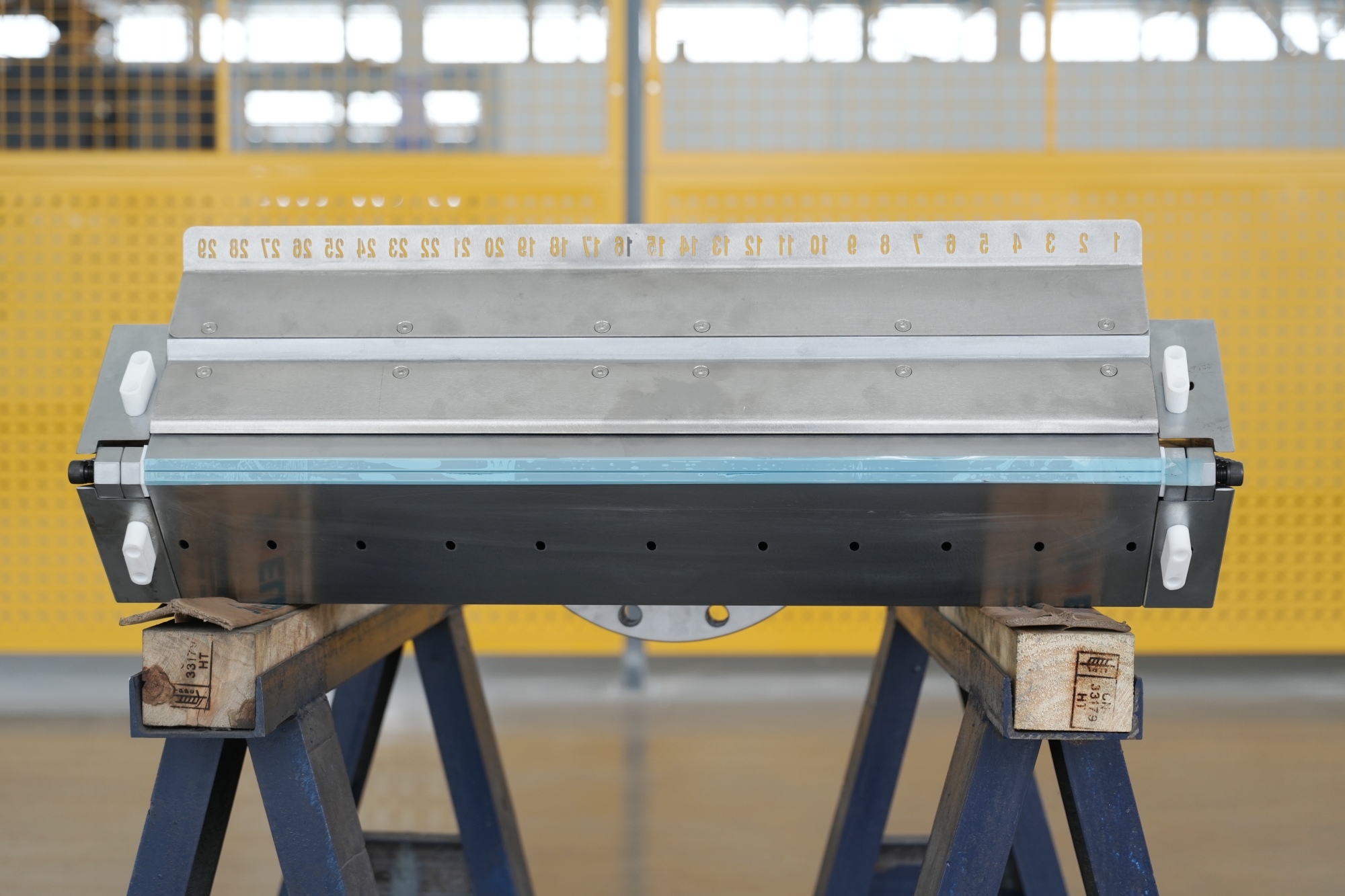
In response to the material characteristics and production process of PVC edge banding, Anhui Jwell Precision Mould's PVC edge banding die incorporates multiple optimized designs to achieve better extrusion results, ensuring product quality and production stability.
1 Computer-Aided Manifold and Coat-Hanger Flow Channel Design Ensuring Uniform Material Distribution for Wide Products
The computer-optimized manifold structure, combined with the standard coat-hanger flow channel featuring a droplet-shaped cross-section, enables the material to flow in a streamlined manner within the die. This design fundamentally resolves the common issue of faster material supply in the center and slower supply at the edges for wide edge banding (e.g., widths exceeding 80 mm). It ensures consistent pressure and flow velocity across the entire die lip width, producing edge banding with uniform thickness and a smooth surface. This is particularly suitable for high-end furniture that requires long-length, wide-edge banding without defects.
2 Circular Manifold Channel and Curved Intersection Line Design Overcoming the Burning Issue of Heat-Sensitive PVC Material
At the center of the die cavity, the curved intersection line where the manifold meets the die lip effectively improves the lateral flow and distribution of the melt, eliminating flow dead zones and stagnation areas. Meanwhile, the circular manifold channel minimizes the decomposition and burning of heat-sensitive materials like PVC during high-temperature extrusion, significantly reducing the occurrence of surface defects such as specks, yellowing, or burnt material on the edge banding. This not only improves the product’s appearance acceptance rate but also extends the continuous production cycle of the die and reduces downtime for maintenance.
3 Push-Pull Fine Adjustment Structure of the Upper Die Lip for Micron-Level Thickness Control
The thickness accuracy of edge banding directly affects the bonding effect and the appearance of finished furniture. This die adopts a push-pull fine adjustment mechanism on the upper die lip, allowing operators to continuously and sensitively adjust the die lip gap locally, achieving micron-level thickness correction across different transverse zones. This design completely eliminates common defects such as “thick in the middle, thin on the sides” or local thickness unevenness, keeping the thickness tolerance of the edge banding stably within ±0.05 mm. It meets the stringent requirements of high-precision processes like laser edge banding for substrate consistency.
4 Optimized External Structure for Improved Roller Contact and Easy Disassembly/Assembly
The external structure of the die has been optimized to achieve better contact with the cooling calibration roller or haul-off unit, ensuring that the extruded edge banding is uniformly stressed during cooling, effectively preventing warpage or deformation. At the same time, the optimized structure makes die disassembly and assembly much more convenient, significantly reducing downtime for size changes or die cleaning, thereby improving the overall utilization rate of the production line. This is particularly suitable for the flexible production needs of manufacturers handling multiple varieties and small batch sizes of edge banding.
5 Comprehensive Advantages: This die integrates fluid dynamics simulation, heat-sensitive material protection, precision adjustment, and user-friendly operation. It not only resolves core pain points in PVC edge banding production—such as uneven material distribution, easy degradation of the material, and large thickness tolerances—but also improves line efficiency through its quick disassembly and assembly design. Therefore, a die employing such technology is key equipment for achieving high-quality, high-stability, and high-profitability mass production of PVC edge banding. It is especially suitable for furniture and decorative material manufacturers who have strict requirements for surface quality, dimensional accuracy, and production flexibility.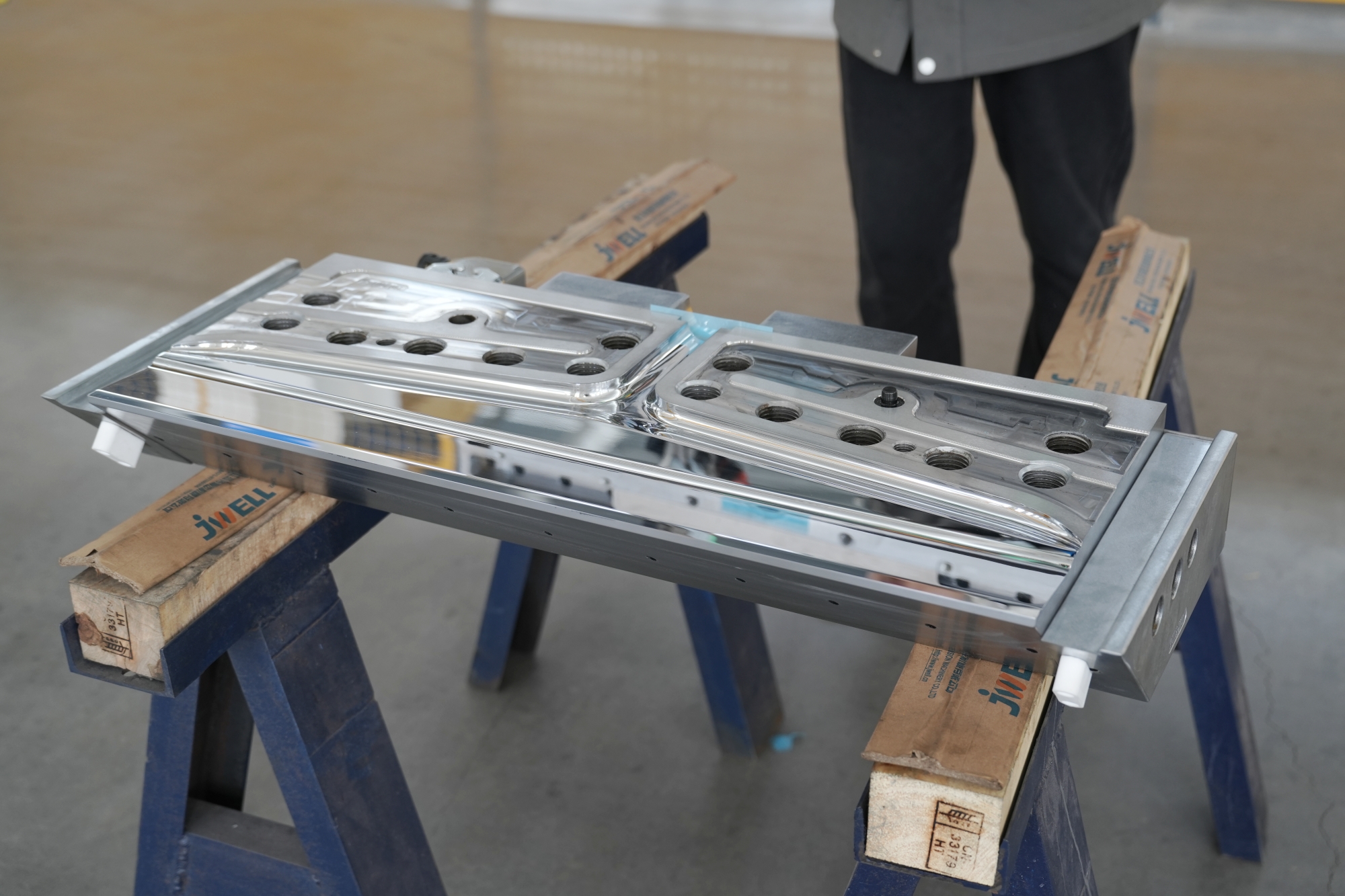
In Summary: PVC thermoplastic edge banding, made from polyvinyl chloride (PVC) through a continuous extrusion process, is a core decorative and protective profile for panel furniture. It provides functions such as moisture protection, reduced formaldehyde emission, enhanced impact resistance, and improved aesthetics. Its production adopts an extrusion process, in which the die is the key to product forming, directly determining the shape, dimensional accuracy, surface quality, and production efficiency of the edge banding. The core functions of the die include: defining the cross-sectional shape, ensuring dimensional accuracy and surface smoothness, supporting subsequent process stability, and adapting to different formulations. Addressing the heat-sensitive nature of PVC, Anhui Jwell Precision Mould's edge banding die incorporates several optimizations: computer-aided manifold and coat-hanger flow channel design ensures uniform material distribution for wide products, eliminating the issue of faster feeding in the center and slower feeding at the edges; the circular manifold channel and curved intersection line design reduces material burning and defects such as specks and yellowing; the push-pull fine adjustment of the upper die lip achieves micron-level thickness control with tolerances stably maintained within ±0.05 mm; and the optimized external structure improves roller contact and ease of disassembly/assembly, reducing downtime. This die integrates fluid dynamics simulation, heat‑sensitive material protection, precision adjustment, and user‑friendly operation, addressing core pain points such as uneven material distribution, easy degradation, and large thickness tolerances. It is the key equipment for achieving stable mass production of high-quality edge banding.

Wechat account

