
Anhui Jwell Precision Mold Co., Ltd.
Anhui Jwell Precision Mold Co., Ltd.
Dual-alloy screw and barrel systems handle a wide range of corrosive and abrasive materials
I. Characteristics and Advantages of Bimetal Screw and Barrel
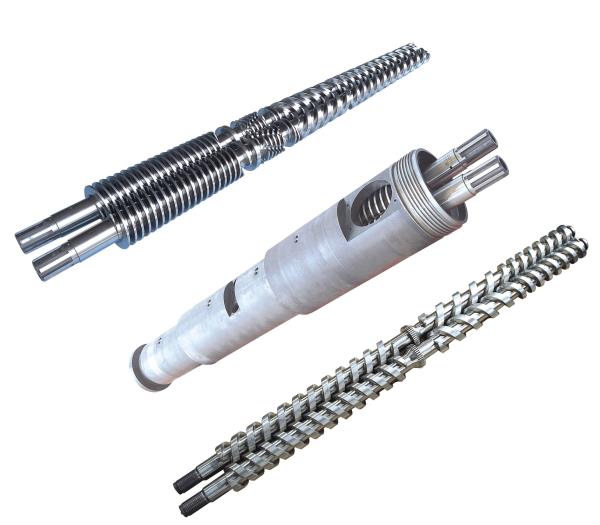
The bimetal screw and barrel represent a comprehensive upgrade over traditional nitrided steel models, specifically designed for high-wear materials such as fiberglass, magnetic powder, bakelite, as well as corrosive materials like nylon and PVC. Anhui JWELL Precision Molds adopts a bimetallic centrifugal casting process, using high-quality alloy steel (e.g., SACM645) as the base material, lined with a tungsten carbide alloy layer. The tungsten content is significantly increased from 10% to 30–50%, resulting in multiplied hardness and wear resistance. Processing length is extended to 4,000 mm, reducing the risk of splicing. Inner diameter ranges from Φ12 to Φ300 mm, effective length up to 12,000 mm, nitriding hardness above HV960, straightness of 0.015 mm/m. An optional chrome plating layer further reduces friction.
The screw surface abandons traditional PTA (Plasma Transferred Arc) welding and adopts HP/HVOF (High-Velocity Oxygen Fuel) thermal spray technology, offering three specialized alloys: WPT1 (corrosion-resistant), WPT2 (wear-resistant and high-temperature-resistant), and WPT3 (general-purpose). These are respectively suited for corrosive conditions (PVC/nylon), high-wear conditions (fiberglass/magnetic powder), and complex combined conditions. Anhui JWELL Precision Molds’s overall alloy coating, combined with barrel reinforcement, ensures precise fit between screw and barrel even under long-term high-speed operation, significantly extending service life and reducing overall operating costs.
II. Processing Difficulties of Various Corrosive/Wear Materials
Nylon (PA) has excellent mechanical properties, but it easily decomposes at high temperatures, releasing acidic gases such as formic acid, which cause strong chemical corrosion to ordinary steel screws and barrels. Its high hygroscopicity, if not properly controlled, leads to bubbles and degradation. Glass-fiber reinforced materials (PA+GF) typically contain 20–50% glass fiber, which is extremely hard. During screw rotation and advancement, the glass fiber acts like “micro-grinding wheels,” causing severe abrasive wear on the screw flights and barrel inner wall. Common nitrided steel screws often experience flight tip sharpening and increased clearance within a few hundred hours, resulting in poor plasticization and reduced output.
Magnetic powder composites are hard and magnetic, causing not only severe abrasive wear but also particle agglomeration, leading to localized overheating and material carbonization. Their scratching effect on metal surfaces is much stronger than that of glass fiber. Bakelite (phenolic resin) is a thermosetting plastic requiring high molding temperatures; the gases released during curing (ammonia, formaldehyde, etc.) are corrosive, and the filler powders further increase wear. Once premature curing occurs inside the screw and barrel, cleaning is extremely difficult. Overall difficulties in processing these materials include: high wear, strong corrosion, high temperature, and the synergistic damage of wear and corrosion, which ordinary screw and barrel combinations cannot simultaneously address.
III. Targeted Application Advantages of Bimetal Screw and Barrel
For the core challenge of acidic gas corrosion during nylon processing, Anhui JWELL Precision Molds’s corrosion-resistant alloy is designed. This alloy contains high proportions of nickel, chromium, and other anti-corrosion elements, forming a dense, pore-free coating via HVOF technology, effectively resisting chemical attack from nylon decomposition products. The barrel’s 30–50% tungsten carbide bimetal liner also offers excellent acid/alkali resistance. In actual tests processing PA66, the WPT1-coated screw lasts more than three times longer than a nitrided steel screw, with no pitting on the surface.
For high-wear materials like glass fiber and magnetic powder — where ordinary screws often fail within 2,000 hours — we use a high-tungsten-carbide barrel combined with WPT2 wear-resistant and high-temperature-resistant alloy. The barrel liner’s tungsten carbide content is increased to 30–50%, effectively resisting cutting by glass fiber and magnetic powder. The WPT2 alloy reaches hardness above HV1200 and is uniformly applied over the entire screw via HVOF technology, eliminating weak points typical of PTA welding. When processing PA66+50% glass fiber, the wear rate is only one-fifth that of nitrided steel, and barrel inner diameter wear is reduced by 70%. When processing magnetic powder, WPT2 withstands instantaneous temperatures above 400°C, preventing adhesion and sintering.
Bakelite presents the triple challenge of high temperature, corrosion, and filler-induced wear. The WPT3 general-purpose alloy integrates the corrosion-resistant phase of WPT1 and the wear/high-temperature resistant phase of WPT2, forming a unique eutectic structure. Its low friction coefficient and high thermal conductivity reduce shear heat generation, while the excellent corrosion-resistant layer resists ammonia attack. With WPT3, bakelite injection molding companies have extended screw cleaning cycles from once a week to once a month, and achieved over 10,000 hours of operation without major overhaul. Additionally, the barrel effective length can reach 12,000 mm, straightness 0.015 mm/m, and the inner bore can be optionally chrome-plated to significantly reduce uneven wear, greatly extending overall service life.
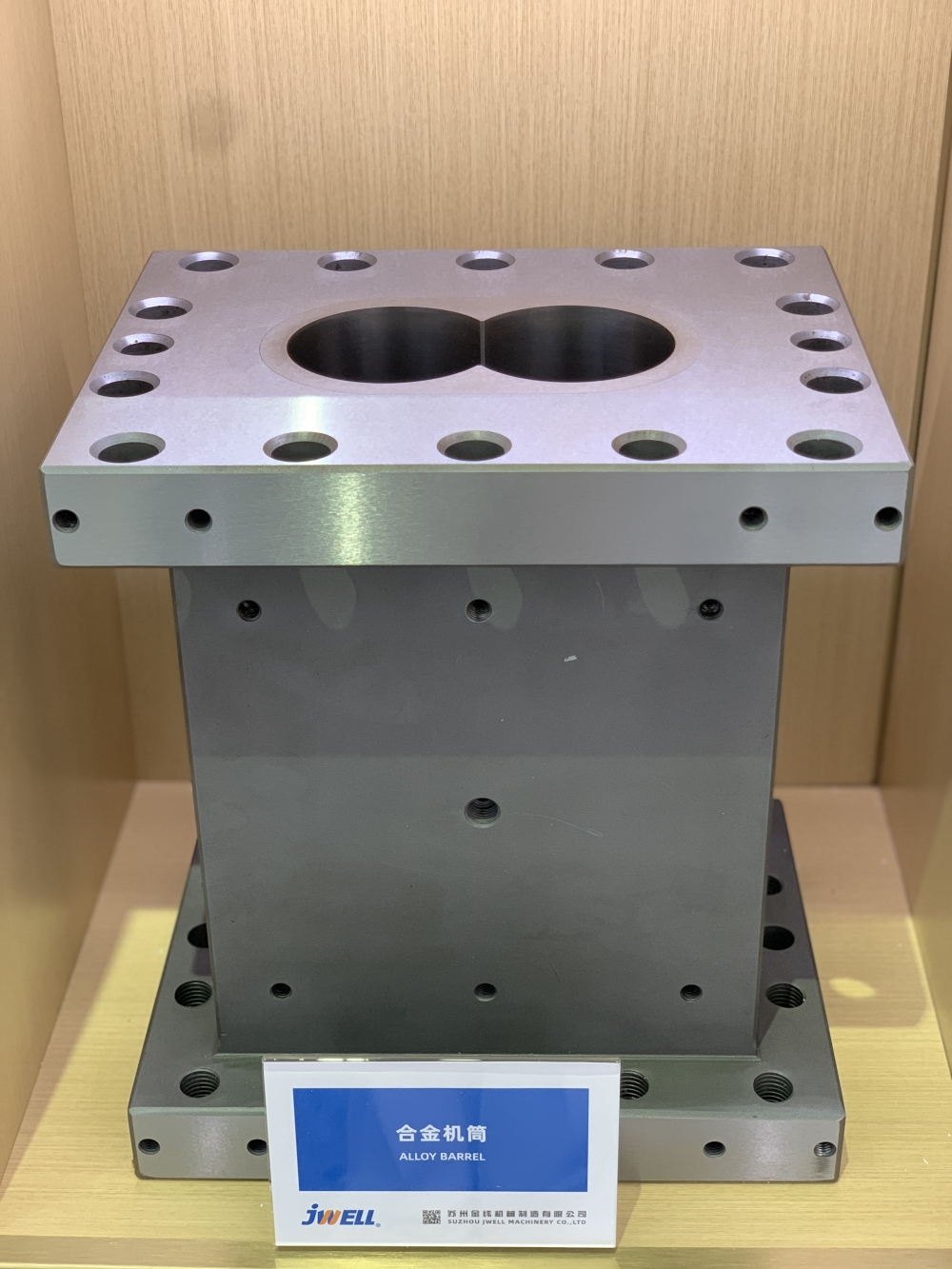
Summary: In response to the processing difficulties of materials such as fiberglass, magnetic powder, bakelite, and nylon — namely high wear, strong corrosion, high temperature, and the synergistic damage of wear and corrosion — Anhui JWELL Precision Molds’s bimetal screw and barrel is specifically designed for highly abrasive and corrosive materials. The barrel adopts bimetallic centrifugal casting with tungsten carbide content increased to 30–50%. The screw materials include three specialized alloys to address corrosion, wear, and combined conditions respectively. Service life is significantly extended.

Wechat account

